
Is your sprinkler system worth repairing, or is it time to replace it
By Elena Haddad · Updated 2026-07-02
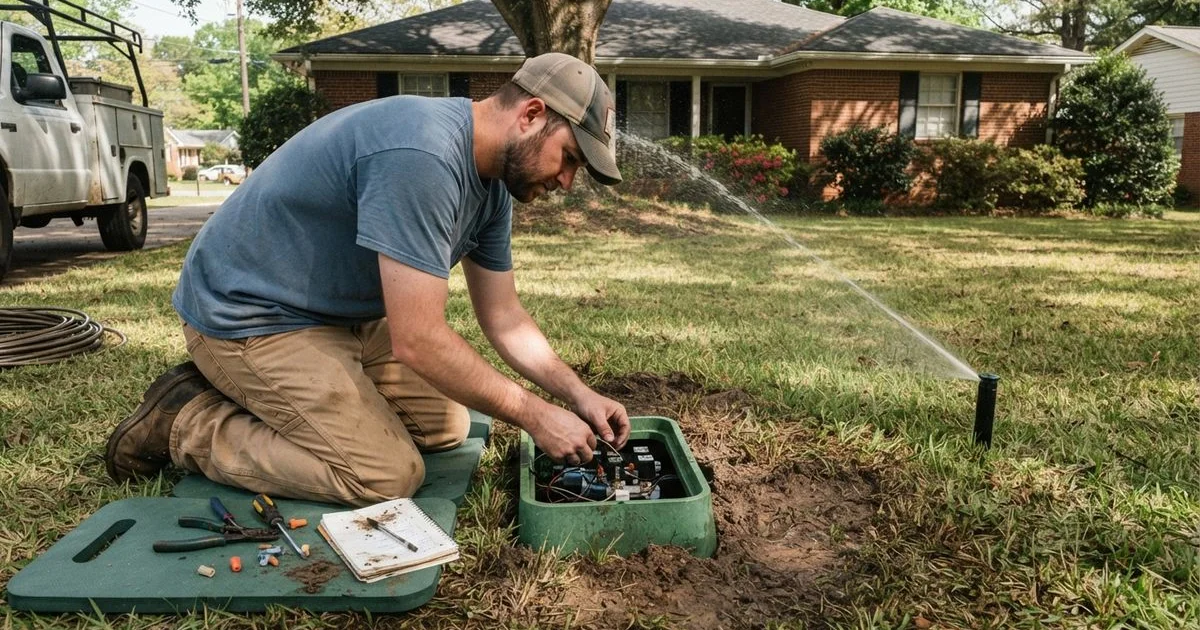
An irrigation system rarely fails all at once. It usually sends a few small signals first: a soggy patch here, a dry corner there, a zone that runs longer than it used to. Reading those signals correctly is the difference between a quick repair and paying for parts you did not need, or worse, ignoring a problem until it gets expensive.
Signs pointing to a simple repair
Most of the time, a struggling system needs a repair, not a full overhaul. Common, fixable issues include:
- A single sprinkler head that is cracked, clogged, or sunk below grade
- One zone that is not turning on, often a stuck or failing valve
- Uneven coverage from heads that have drifted out of alignment
- A controller that has lost its programming after a power outage
- A minor leak at a fitting or connection point
These are typically diagnosed and fixed in a single visit, and they do not necessarily mean anything else is wrong with the system.
Signs that point to something bigger
| Symptom | Likely cause | What it usually means |
|---|---|---|
| Large soggy area or standing water in the yard | Cracked mainline or major pipe break | Repair, but potentially a larger dig and repair job |
| Water pressure dropping across multiple zones | Aging pipe, buildup, or a failing pressure regulator | Could be a repair or a sign the system needs broader attention |
| Frequent repeat repairs on the same zone | Underlying pipe or valve degradation | Worth evaluating whether a section needs replacing rather than patching again |
| System is more than a couple decades old with original parts | General wear across components | Full or partial replacement may cost less long-term than repeated repairs |
| Backflow preventer failing inspection or testing | Aging or damaged device | Needs replacement, and may have code implications for your water supply |
Why fall winterization matters so much here
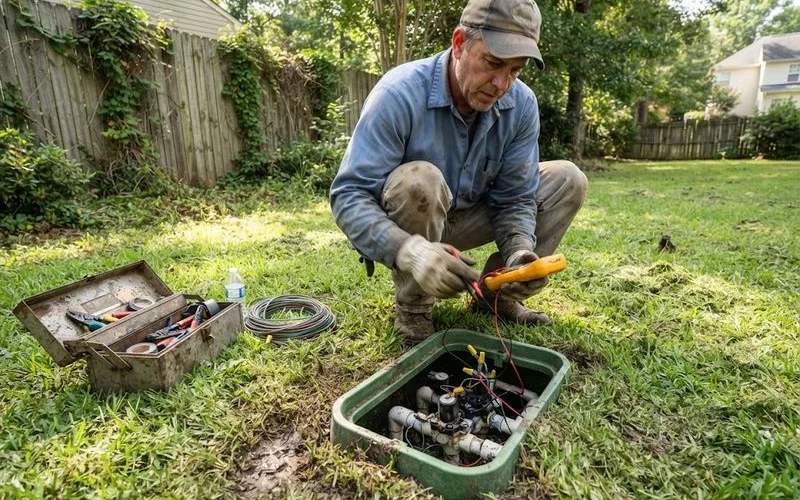
A large share of irrigation repair calls in this region trace back to a skipped fall shutoff. When water is left in the lines through a freeze, it expands and cracks pipes, fittings, and valves from the inside, damage that often does not show up until the system is turned back on in spring. If you are dealing with repeated repairs every spring, ask whether the system had a proper fall blowout the previous year. That single seasonal service, done consistently, prevents a large share of these issues before they start.
When repair stops making financial sense
There is no fixed rule for when to stop repairing and start replacing, but a pattern is worth watching for: if you are calling for a repair on the same zone or the same general area more than once or twice in a short window, the underlying pipe or valve is probably degrading rather than being an isolated failure. At that point, a broader repair or partial system replacement often costs less over a couple of years than continuing to patch the same spot.
A backflow preventer that repeatedly fails testing is a clearer signal, since it is a required safety device and a failing one should be replaced rather than repeatedly serviced.
Getting a straight answer from a technician
Ask directly whether what you are looking at is a contained issue or a sign of broader wear. A technician who explains what they found, rather than just quoting a fix, is generally giving you the information you need to make a good call. If a diagnosis feels vague or a quote jumps straight to full replacement without explaining why, get a second opinion before committing.
You can compare Spartanburg’s irrigation and sprinkler contractors and see how we evaluate responsiveness and workmanship in our methodology. Start at the homepage for the full range of local providers.
Questions people ask
- How long does a sprinkler system typically last before major issues show up?
- Well-maintained systems with regular seasonal service can run for many years without major work. Systems that skip fall winterization tend to develop pipe and valve damage sooner, since trapped water expands and cracks fittings when it freezes.
- Is a dry patch always a broken head?
- Not always. A dry spot can be a clogged or misaligned head, a stuck valve not opening, root intrusion into a line, or simply a zone that needs its runtime adjusted for the season. A technician can usually tell the difference in a single visit.
- Can I fix small irrigation problems myself?
- Swapping a visibly cracked sprinkler head is a manageable DIY task for most homeowners. Anything involving the valve manifold, controller wiring, or a suspected mainline break is worth calling a professional for, since diagnosing those issues without the right tools often leads to guesswork.
- Does a smart controller fix an aging system's problems?
- A smart controller improves scheduling and can reduce water waste, but it will not fix physical issues like broken heads, degraded pipe, or a failing valve. Think of it as an upgrade to a healthy system, not a repair for a struggling one.