
What to expect from a landscape design and installation project
By Elena Haddad · Updated 2026-07-06
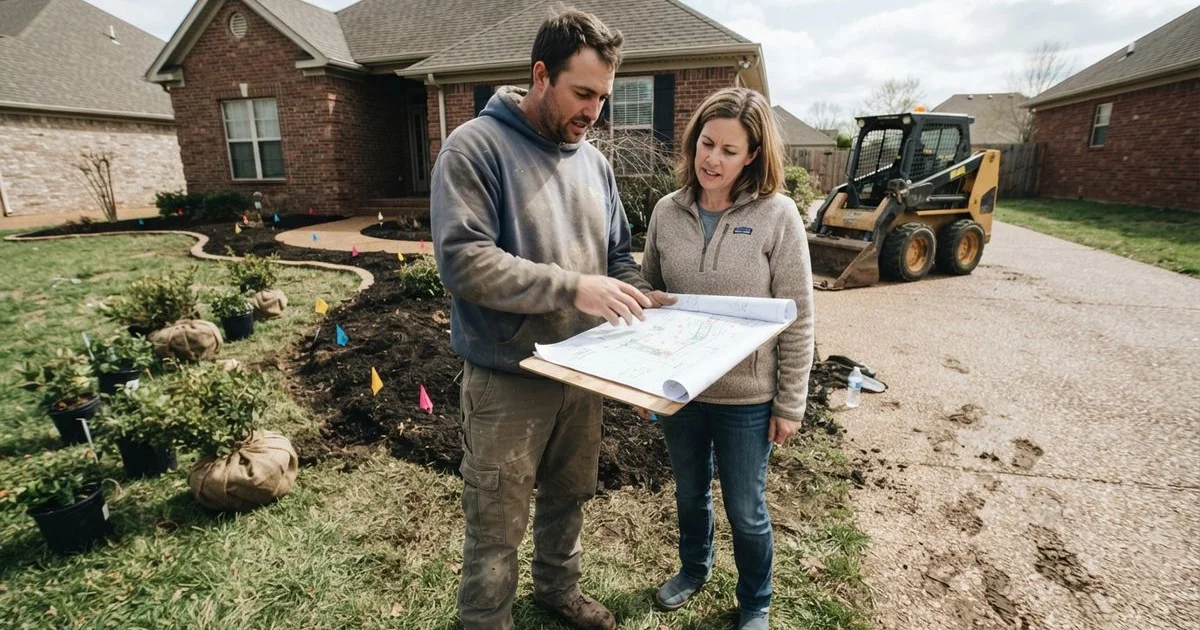
A landscape design and installation project can feel like a black box if you have never gone through one: what actually happens between “I want my yard redone” and a finished result? Here is the general sequence most Spartanburg projects follow, and what to watch for at each stage.
Site assessment and initial consultation
Most projects start with a site visit rather than a phone quote. A designer or project lead walks the property, checking soil conditions, existing drainage patterns, sun and shade exposure, and any structural constraints like slopes or utility lines. This is also when you talk through your goals: a low-maintenance refresh, an entertaining space, more curb appeal, or solving a specific problem like standing water after rain.
Spartanburg’s clay soil and hardiness zone (7b) both factor into what a designer recommends here. Plants that thrive in a cooler or drier climate often struggle through the heat and humidity of an Upstate summer, so a designer familiar with the area steers you toward species that actually hold up.
Design and planning
For anything beyond a small refresh, expect a design phase before work begins. This typically includes a plan showing plant placement, any hardscape elements, and how grading or drainage will be handled. This is the stage to ask questions and request changes, since revisions here are far cheaper than changes once material is in the ground.
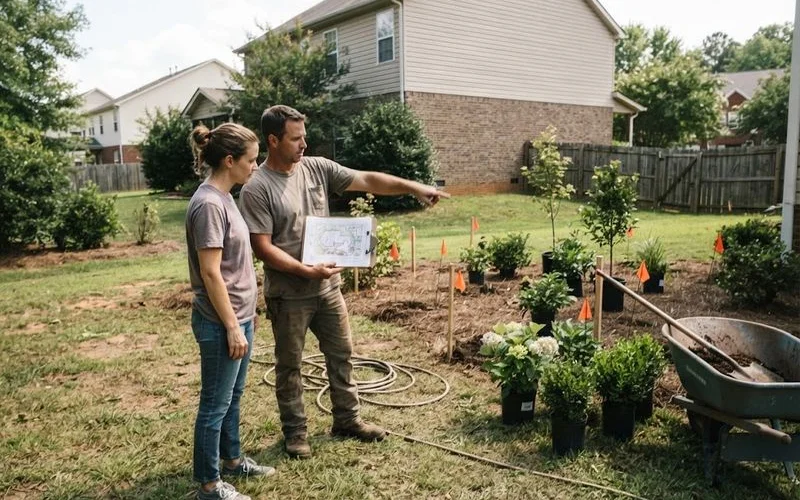
Grading and site prep
Before anything gets planted or built, the ground itself often needs reshaping. Grading establishes the slope that moves water away from your house and prevents pooling in low spots. Skipping or rushing this step is a common reason projects develop drainage problems months later, so it is worth asking directly how your project handles grading, even if it feels like an invisible line item.
Installation
This is the visible phase: planting trees, shrubs, and groundcover, laying sod, building any included hardscape features, and installing irrigation if it is part of the scope. Larger properties or more complex designs are sometimes installed in phases rather than all at once, which can stretch the timeline but reduces disruption to the property at any given time.
Final walkthrough and aftercare
A good project wraps with a walkthrough where the crew shows you what was installed, how to care for new plantings, and any watering schedule needed to help everything establish. Newly installed plants and sod need more frequent watering for the first few weeks than an established lawn, so ask specifically what that early care looks like before the crew leaves. Once the new landscape settles in, deciding whether to keep mowing and upkeep in-house or bring in a crew is worth revisiting; our DIY lawn care vs. hiring a pro guide walks through that decision.
What separates a smooth project from a frustrating one
| What to look for | Why it matters |
|---|---|
| A site visit before a firm quote | Signals the designer is pricing your actual yard, not a generic estimate |
| A written plan for larger projects | Reduces costly mid-project changes |
| Clear discussion of grading and drainage | Prevents water problems from showing up after the fact |
| A defined aftercare and watering plan | New plantings and sod need different care than established landscaping |
| Realistic timeline that accounts for weather | Rushed installs on wet or frozen ground rarely hold up as well |
Communication through the process matters as much as the finished result. Reviewers in this area consistently point to responsiveness and clear updates during a project as what separates a good experience from a stressful one, while vague timelines and unreturned calls are common sources of frustration.
Browse Spartanburg’s landscape design and installation providers to compare local project photos and reviews, and see our methodology for how we evaluate them. You can also explore the full directory for other services your project might need.
Questions people ask
- How long does a full landscape design and installation project take?
- It depends heavily on scope. A modest planting and mulch refresh might wrap in a day or two, while a full redesign with grading, plant installation, and hardscape features can run several weeks. Weather and material availability both affect the timeline.
- Do I need a formal design before installation starts?
- For a large or multi-phase project, yes, a design plan helps avoid costly changes mid-project. For smaller updates like adding a few beds or replacing overgrown shrubs, many homeowners skip a formal design and work directly with the installation crew.
- What plants will actually survive in Spartanburg long term?
- Spartanburg sits in USDA hardiness zone 7b, and it also falls within the transition zone where both warm and cool season turf can grow. A designer familiar with local conditions will choose species rated for this zone rather than plants that struggle through winter or summer heat here.
- Will the crew handle drainage problems as part of the project?
- Many will, if you flag the issue during the initial site visit. Grading and drainage are often addressed early in a project, before planting or hardscape work begins, since fixing them afterward usually means redoing finished work.