
Storm damage and emergency tree cleanup: what to expect and what it costs
By Elena Haddad · Updated 2026-07-09
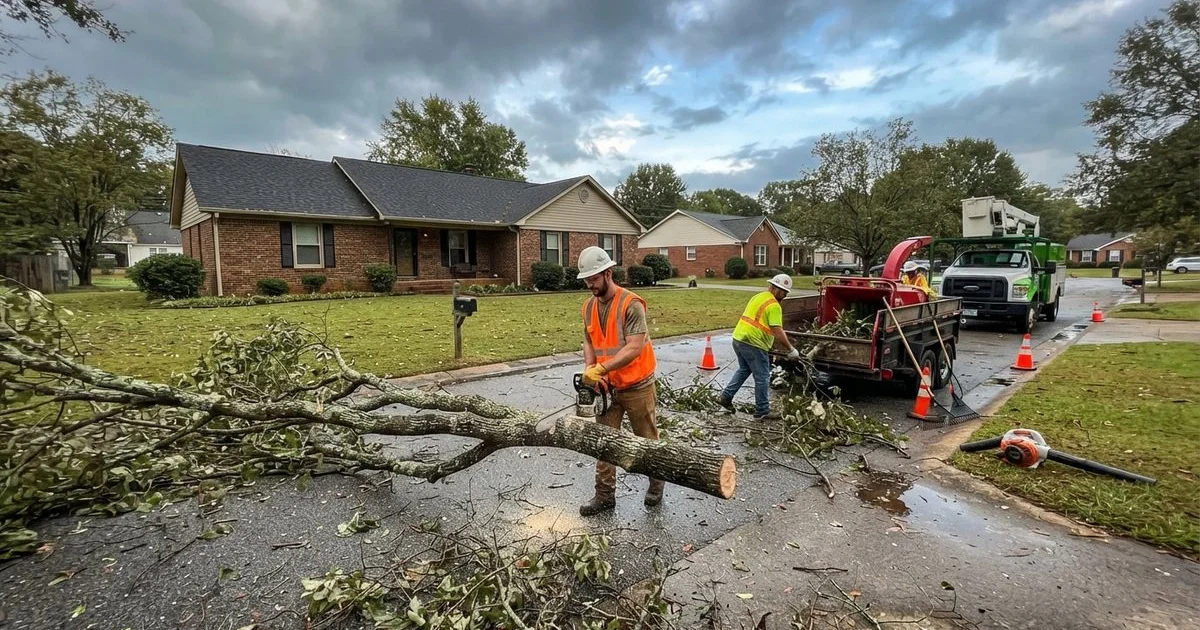
Severe storms move through the Upstate often enough that most Spartanburg homeowners eventually deal with a downed tree or storm-damaged yard. Knowing what drives the cost and how quickly crews can respond helps you make faster, better decisions when it actually happens.
What makes a job urgent versus routine
Not every downed tree needs an emergency call. A tree or large limb resting on your house, car, or a power line is a genuine emergency, both for safety and to limit further damage. A tree blocking your only driveway or a hazard leaning precariously near a walkway also usually qualifies. A tree down in an open part of the yard with no immediate risk to people, structures, or power lines can typically wait for a standard appointment, often at a lower cost than a rush call.
What drives tree removal cost
Tree height. Taller trees take more time, more equipment, and carry more risk to remove safely, and cost scales up accordingly.
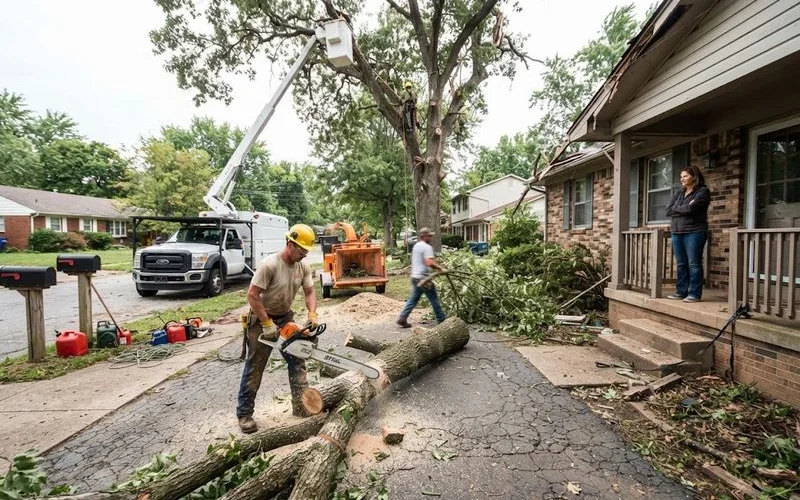
Access and location. A tree in an open, easily reached part of the yard is the least expensive to remove. One near a fence, shed, or driveway takes more careful work. A tree close to the house, tangled with power lines, or otherwise hard to reach costs the most, since it demands slower, more deliberate technique and sometimes specialized equipment.
Urgency. Emergency or same-week calls after a storm typically cost more than a scheduled removal, since crews are working around a compressed timeline and often prioritizing based on hazard level rather than order received.
Cost factors at a glance
| Factor | Effect on cost |
|---|---|
| Tree height | Taller trees cost more to remove |
| Easy, open access | Lowest cost scenario |
| Near fence, shed, or driveway | Moderate cost increase |
| Near house, power lines, or hard to reach | Highest cost, requires careful technique |
| Emergency or same-day scheduling | Adds a premium versus a routine appointment |
| Stump grinding | Usually priced separately from removal |
What happens during a storm cleanup call
A crew assessing storm damage typically starts by evaluating hazard level before touching anything: is the tree under tension, near power lines, or structurally unstable in a way that could shift unexpectedly. Once it is safe to proceed, removal, hauling, and often a full site cleanup follow. Many companies that handle routine tree work are the same crews equipped for storm response, since they already carry the right equipment.
Stump grinding is usually a separate line item from the removal itself, so ask upfront whether you want the stump ground out or left for a later date.
Before the crew arrives
If it is safe to do so from a distance, photograph the damage for insurance purposes before cleanup begins. Keep people and pets away from any leaning or partially fallen tree, since the danger is often not obvious until it shifts. Do not attempt to cut or move a tree that is tangled with power lines or resting under tension, this is exactly the kind of situation professional equipment and training exist for.
Finding help quickly
When you need a fast response, look for a provider who explicitly mentions storm or emergency work rather than assuming any landscaper can handle it on short notice. Reviews that mention prompt turnaround after severe weather are a good signal a company has handled this kind of call before. Storms hit on their own schedule, but knowing the seasonal rhythm of yard work in Spartanburg gives you a sense of how backed up crews might already be when one rolls through.
Browse Spartanburg landscaper listings for providers who handle tree and storm cleanup work, and check our methodology for how we evaluate responsiveness and reliability.
Questions people ask
- How fast can someone come out after a storm?
- It varies by how widespread the damage is. After a major regional storm, crews are often booked solid for days handling the most urgent jobs first, like a tree on a structure or blocking a driveway. A downed tree that is not an active hazard may wait longer.
- What counts as an emergency versus something that can wait?
- A tree resting on a house, vehicle, or power line, or blocking your only way in or out, is generally treated as urgent. A downed limb in the yard with no immediate hazard can usually wait for a normal appointment slot.
- Does insurance typically cover storm-related tree removal?
- Many homeowner policies cover tree removal when the tree damages a covered structure, but coverage for a tree that fell without hitting anything varies by policy. Check directly with your insurer before assuming either way, and keep photos of the damage before cleanup starts.
- Should I try to move a downed tree myself?
- Avoid it if the tree is near power lines, leaning under tension, or resting on a structure. These situations carry real injury risk, and a professional crew has the equipment and training to handle them safely.