
Low-maintenance landscaping for aging in place
By Elena Haddad · Updated 2026-07-21
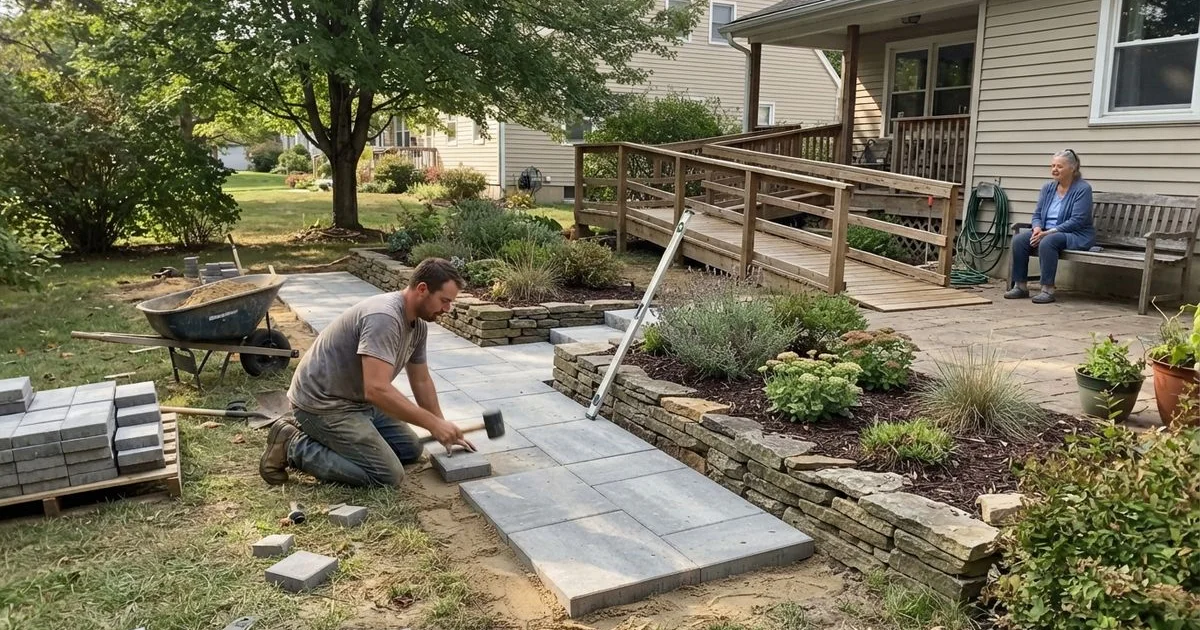
Whether you are planning ahead for your own home or helping a parent stay safely in theirs, the goal with aging-in-place landscaping is usually the same: less physical upkeep, safer footing, and a yard that still feels like a place worth being in, not a chore list.
Start with what takes the most effort
Before changing anything, it helps to identify which parts of the current yard actually demand the most time and physical strain. For most properties, that is usually one or more of: a large mowed lawn, garden beds that need constant weeding and bending, uneven or unstable walking surfaces, and steps without handrails.
Reducing lawn area without losing the yard
Shrinking the actual mowed footprint is one of the highest-impact changes available. Replacing a portion of turf with groundcover, mulched beds, or hardscape reduces both mowing time and the physical demands of maintaining a large lawn, while keeping enough green space that the property still feels like a yard rather than a paved lot.
Safer surfaces and access
Uneven pavers, loose gravel paths, and steps without handrails become real hazards over time in a way they were not before. A few practical changes make a meaningful difference:
- Level, even paving on primary walkways, replacing loose gravel or shifted stone
- Handrails on any steps, even just a couple of risers
- Wider paths where a walker or wheelchair might eventually need the space
- Adequate lighting along walkways for visibility after dark
Lower-maintenance planting choices
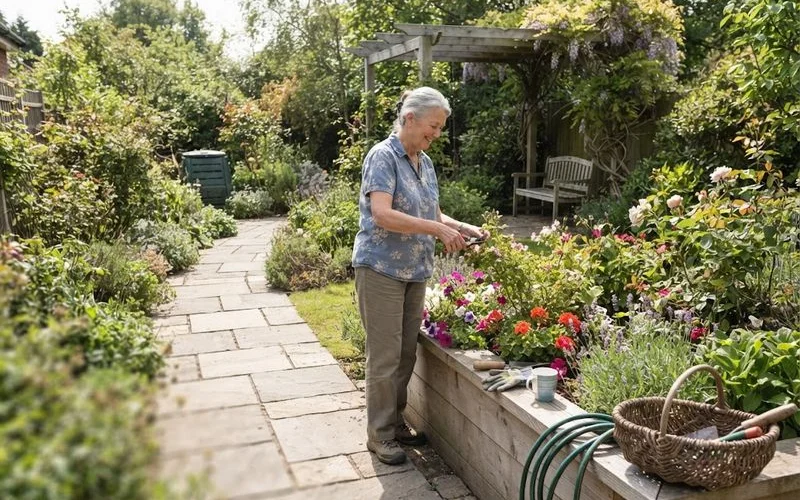
Not all landscaping requires the same ongoing effort. Native and drought-tolerant plants generally need less watering and less frequent care than high-maintenance ornamentals. Raised garden beds bring planting height up to a comfortable working level, cutting down on the bending and kneeling that make ground-level gardening harder over time, while still letting someone who enjoys gardening keep doing it.
| Change | What it addresses |
|---|---|
| Shrinking mowed lawn area | Reduces regular mowing time and physical demand |
| Raised garden beds | Reduces bending and kneeling for planting and weeding |
| Even, wide walkways | Reduces trip and fall risk |
| Handrails on steps | Adds stability where it is needed most |
| Smart or automated irrigation | Reduces manual watering and timer adjustment |
| Native, low-water plantings | Cuts down on watering frequency and general upkeep |
Automating the routine tasks
A weather-based smart irrigation controller removes the need to manually adjust watering schedules through the season, which matters if getting outside to manage a timer or hose has become harder. Some homeowners also arrange a standing maintenance service for mowing and seasonal cleanup specifically so the physical work is handled by someone else, while they keep the parts of gardening they enjoy, like tending a raised bed or containers near the door.
Bringing this up with a parent
If you are approaching this on behalf of an aging parent rather than for yourself, how the conversation happens matters. Framing changes around keeping them safely independent in a yard they still enjoy, rather than around what they can no longer do, tends to go over better. Involving them in decisions about what stays and what changes, rather than presenting a finished plan, usually helps the transition feel less like a loss of control.
Working with a landscaper on this kind of project
Not every provider has direct experience designing for mobility and reduced maintenance specifically, so it is worth asking directly about their approach to accessible paths, raised beds, and reduced-lawn designs before hiring for this kind of project. A provider who asks thoughtful questions about how the space will actually be used day to day is a good sign. If the person you are helping rents rather than owns their home, check our guide on who’s responsible for lawn care in a rental before making changes to someone else’s property.
Browse Spartanburg landscaper listings to find a provider for this kind of project, and see our methodology for how we evaluate them.
Questions people ask
- What is the fastest way to reduce yard maintenance without a full redesign?
- Shrinking the actual mowed lawn area and replacing high-maintenance beds with mulched, low-care plantings usually delivers the biggest reduction in weekly effort without touching hardscape or grading.
- Are raised garden beds a good option for someone with mobility limits?
- Often yes. Raised beds bring planting height up to a comfortable working level and can reduce the bending and kneeling that make ground-level gardening difficult over time.
- How do I bring up yard changes with an aging parent without it feeling like you're taking something away?
- Framing it around keeping them safely independent in a space they enjoy, rather than around limitations, tends to land better. Involving them in what stays and what changes helps too.
- Does a smart irrigation system help with a low-maintenance goal?
- Yes, a weather-based controller reduces the manual adjustment that watering by hand or a basic timer requires, which is useful if physically getting outside to manage a hose or timer has become harder.